
NMC CBME & MUHS Compliant Peer-Reviewed Clinical Vault • GMC Chhatrapati Sambhajinagar

Author: Shrikant Bhosale

  • CNS Examination Steps: The Ward-Ready Neuro Checklist (Viva-Proof)

    ✅ Clinically Verified MBBS Resource • Written by Shrikant Bhosale (GMC Aurangabad) • NMC CBME Aligned

    The CNS examination is where practical exams are quietly won or lost. Cardiac and respiratory exams forgive a little fumbling. The neuro exam does not — one skipped step and the examiner knows you’re reciting instead of examining.

    This is the exact sequence I use on ward rounds and in front of internal examiners, in the order that keeps you from missing anything. Practise it on a partner until it becomes muscle memory.

    Before you touch the patient

    • Wash hands, introduce yourself, take consent.
    • Position: patient lying comfortably; you examine from the right side.
    • Expose only what you’re examining; keep the patient covered otherwise.
    • Equipment: tendon hammer, tuning fork (128 Hz), torch or ophthalmoscope, cotton wisp, pin, test tubes of warm/cold water, tongue depressor, Snellen chart, two objects (e.g., coin and key) for cortical sensation.

    The sequence (memorise this order)

    Higher function → Cranial nerves → Motor → Reflexes → Sensory → Coordination → Gait → Meningeal signs.

    1. Higher mental functions

    Assess level of consciousness, orientation to time/place/person, attention and memory, and speech. For a formal assessment use the MMSE or MoCA. Note behaviour and whether the patient is cooperative — this shapes how much of the exam you can trust.

    2. Cranial nerves I–XII

    Nerve How you test it
    I — OlfactoryNon-irritant smells (often only tested if history suggests)
    II — OpticVisual acuity, fields, colour vision, fundus, pupillary light reflex
    III, IV, VIPupil (III), eye movements in all directions, diplopia; check ptosis
    V — TrigeminalFacial sensation (3 divisions), corneal reflex, masseter/temporalis power, jaw jerk
    VII — FacialForehead wrinkling, eye closure, smile, puff cheeks (UMNL vs LMNL)
    VIII — VestibulocochlearRinne and Weber (hearing), nystagmus/vertigo, Romberg
    IX, XGag reflex, palatal movement, uvula position, voice quality, swallow
    XI — AccessoryShoulder shrug (trapezius), head turn against resistance (sternocleidomastoid)
    XII — HypoglossalTongue protrusion, look for deviation and fasciculations

    Say the pattern out loud: “Cranial nerves — no deficit detected,” or describe the exact abnormality. The examiner listens for whether you can localise the lesion.

    3. Motor system

    • Inspection: bulk, wasting, fasciculations, abnormal posturing.
    • Tone: passively flex/extend each limb — note spasticity (clasp-knife, UMNL) vs rigidity (lead-pipe/cogwheel, extrapyramidal) vs flaccidity (LMNL).
    • Power: grade 0–5 (MRC). Test proximally and distally in each limb.
    • Nutrition: muscle tenderness, involuntary movements, coordination of movement.
    GradeMeaning
    0No contraction
    1Flicker only
    2Movement with gravity eliminated
    3Movement against gravity
    4Against gravity + some resistance
    5Normal power

    4. Reflexes

    • Deep tendon reflexes: biceps (C5–6), triceps (C7–8), supinator (C5–6), knee (L3–4), ankle (S1–2). Grade 0 = absent, 4+ = clonus.
    • Superficial reflexes: abdominal, cremasteric, plantar (Babinski).
    • Primitive/abnormal: Hoffman, clonus — if present, document carefully.
    • Always compare both sides and interpret in context (UMNL: brisk + Babinski; LMNL: reduced).

    5. Sensory system

    • Superficial: fine touch, pain (pinprick), temperature — dermatome by dermatome.
    • Deep/kinaesthetic: vibration (128 Hz tuning fork), joint position sense.
    • Cortical: two-point discrimination, stereognosis, graphesthesia, extinction.
    • Map any deficit to a pattern: dermatomal, peripheral nerve, or a spinal level.

    6. Coordination

    • Finger–nose and heel–shin tests (intention tremor, dysmetria).
    • Dysdiadochokinesia: rapid alternating movements.
    • Romberg’s test: standing, feet together, eyes open then closed.

    7. Gait and station

    Observe a normal walk, then ask for tandem gait, heel and toe walking. Note hemiplegic, ataxic, parkinsonian, waddling or steppage gait — each points to a different lesion.

    8. Meningeal signs

    Neck stiffness, Kernig’s sign, Brudzinski’s sign — critical when infection is suspected.

    How to present your findings

    “On examination of the central nervous system: higher mental functions were normal; no cranial nerve deficit; tone and power were normal in all four limbs with grade 5 power; deep tendon reflexes were normal and symmetric; plantar reflexes were flexor bilaterally; sensory and coordination testing were normal; gait was normal; no meningeal signs.”

    Then, if abnormal: state the net pattern and the site of the lesion. That single line — pattern plus localisation — is what separates a pass from a distinction.

    Viva traps that actually come up

    • Difference between UMNL and LMNL signs (tone, reflexes, plantar, wasting, fasciculations).
    • Which cranial nerve and which side in a given stroke syndrome.
    • How you localise a hemiplegia vs a mononeuropathy vs a radiculopathy.
    • Why you test vibration with a 128 Hz fork specifically, and joint position sense both sides.
    • What Romberg’s sign positive actually indicates (proprioceptive deficit, not cerebellar).

    Before your next posting, skim my first-year MBBS book list to be sure the examination guides you own are the right ones, and explore more clinical-skills and viva guides.
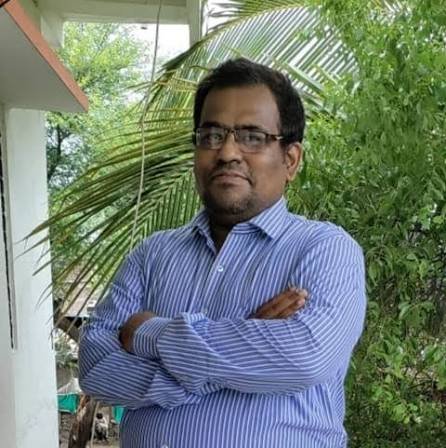
    Shrikant Bhosale — Final Year MBBS Student

    Written by Shrikant Bhosale

    Final Year MBBS Student at Government Medical College, Chhatrapati Sambhajinagar (Aurangabad), Maharashtra. I write the study, ward and career guides I wish existed when I started MBBS — grounded in the real NMC curriculum, real university exams and real ward experience. More about me →

    Educational use only. This guide is written for medical students and is not medical advice. Clinical protocols, drug doses and guidelines change — always verify against the latest standard textbooks and official NMC / institutional guidance before applying anything in practice. Read the full disclaimer.

    📌 Executive Summary & High-Yield Takeaways

    • Follow the strict sequence: Higher Mental Functions -> Cranial Nerves (I to XII) -> Motor System -> Reflexes -> Sensory System -> Cerebellar Signs -> Meningeal Signs.
    • Never skip consent, positioning, and side-by-side comparison.
    • Motor exam order is rigid: Inspection (wasting/fasciculations) -> Tone -> Power (MRC Grade 0-5) -> Reflexes -> Clonus.
    • Localize the lesion before concluding: UMN vs LMN, cortical vs subcortical vs spinal vs peripheral neuropathy.

    Frequently Asked Questions (FAQ)

    Common questions asked by medical students regarding this topic:

    Q: What is the difference between UMN and LMN lesion signs?

    UMN lesions present with hypertonia (spasticity/clasp-knife), hyperreflexia, extensor plantar response (Babinski sign), and absent fasciculations. LMN lesions present with hypotonia (flaccidity), hyporeflexia or areflexia, flexor or absent plantar response, muscle wasting, and visible fasciculations.

    Q: How do examiners test the Babinski sign correctly?

    Use the blunt end of a reflex hammer or key to stroke the lateral border of the sole from the heel towards the little toe, then curve medially across the metatarsal heads. A true positive sign is slow, tonic dorsiflexion of the great toe with fanning of the other toes.

    Q: What is the most common mistake students make during cranial nerve examination?

    Testing cranial nerves out of sequence, failing to test visual fields by confrontation correctly (eye level), and omitting the corneal reflex or gag reflex when evaluating brainstem lesions.

    Shrikant Bhosale, Final Year MBBS Student

    Written by Shrikant Bhosale

    Final-Year MBBS Student at Government Medical College, Chhatrapati Sambhajinagar (Aurangabad), Maharashtra. Affiliated with Maharashtra University of Health Sciences (MUHS). Written to provide unbloated, peer-tested medical education resources grounded in real hospital ward practice and NMC CBME university examinations.

    View Author Profile & Clinical Postings • Editorial Standards • Submit Errata

  • NEET PG 2026 Preparation Strategy: A 12-Month Plan That Actually Works

    ✅ Clinically Verified MBBS Resource • Written by Shrikant Bhosale (GMC Aurangabad) • NMC CBME Aligned

    NEET PG is not a memory test. It is a retrieval-speed test under pressure — 200 clinical questions in a single sitting, where your rank depends on how fast you can pull the right fact out of a crowded head. That changes everything about how you should prepare.

    I’m in my final year of MBBS at a government medical college, which means I’m planning PG preparation alongside postings, case presentations and university exams. This is the strategy that actually survives a real MBBS timetable.

    Understand the exam before you study for it

    NEET PG is a single-session, computer-based test of 200 multiple-choice questions. The exact duration and marking scheme are set in the official NBE information bulletin each year and have changed between cycles — always confirm the current bulletin before you plan your attempt. As a working guide, questions are drawn across all 19 subjects with heavy weight in the clinical subjects.

    Where the marks actually are

    Approximate relative weightage (indicative — always track the PYQ trend for your target year):

    Tier Subjects Strategy
    High yieldMedicine, Surgery, OBG, Pediatrics, Pathology, Pharmacology, MicrobiologyNon-negotiable. Revise repeatedly.
    Medium yieldPSM, Anatomy, Physiology, Biochemistry, Forensic Medicine, ENT, Ophthalmology, OrthopaedicsTargeted, formula-and-fact based.
    Low yieldPeripheral subjects with few questionsRevise the high-yield core only.

    The 12-month plan (works alongside MBBS)

    Months 1–3: Build the base

    • Pick one primary resource per subject and stick to it (a good video lecture series plus one standard textbook for the high-yield subjects).
    • Read subject-wise, not topic-wise at this stage — finish a subject before moving on.
    • Start Anki or a spaced-repetition deck from day one. This is the single highest-ROI habit for NEET PG.
    • Solve subject-wise PYQs as you finish each subject.

    Months 4–6: Clinical build-up and PYQ engine

    • Move into Grand Tests (GTs) every 2–3 weeks. Do not wait until you “feel ready” — the GT is the feedback loop.
    • After every GT, spend more time on your wrong and guessed questions than on your score. Keep a mistake notebook, in one place, physically.
    • Begin rapid revision of high-yield subjects using condensed notes.

    Months 7–9: Revision loops

    • Target 3 full revision cycles of the high-yield subjects by the exam.
    • Weekly GTs with strict timing. Simulate the real exam (no pauses, same time of day).
    • Drill image-based, ECG, X-ray and clinical-scenario questions — these decide your rank at the top.

    Months 10–12: Exam mode

    • No new resources. Only your own notes, your mistake notebook and PYQs.
    • 2 GTs per week; the day after each is dedicated to review, not new study.
    • Protect sleep, eat properly, and taper study before test day.

    The 90-day emergency plan

    If you’re already in final year and have three months: cut to the core. High-yield subjects only, heavy PYQ solving, daily mixed MCQ practice, one revision cycle with Anki, and GTs every three days. Skip anything low-yield. It is better to know 60% of the syllabus cold than 100% vaguely.

    Resources that pull their weight

    In India the mainstream choices are Marrow, PrepLadder, DAMS and Cerebellum, with Anki for retention. The truth is that most serious aspirants do fine with one video platform plus good books and relentless PYQ practice. Do not stack three subscription platforms — that’s a route to studying nothing deeply. If you want a deeper comparison of platforms and what they are best at, that is coming in our dedicated resource-comparison guide.

    Mistakes that cost ranks

    • Collecting resources instead of finishing one.
    • Reading without testing. If you never retrieve, you never retain.
    • Ignoring your mistake notebook. Ranks are built by fixing repeated errors.
    • Skipping GTs because “I’m not ready.” You are never ready. Take them anyway.
    • Studying at low intensity for 12 hours instead of high intensity for 6. Protect focus using the tactics in the student-life guides.

    Frequently asked questions

    When should I start preparing for NEET PG?

    Ideally in the third year or early final year, so you can integrate preparation with clinical postings. Starting in final year is entirely workable with a focused, high-yield-first plan.

    Is coaching necessary for NEET PG?

    No. A structured video platform plus standard books, PYQs and regular Grand Tests is enough for most students. Coaching mainly supplies structure and peer pressure — both are replaceable if you are disciplined.

    How many revisions are enough before NEET PG?

    Aim for at least three rapid revision cycles of the high-yield subjects, with spaced repetition running the whole time. Quantity of revisions matters less than how actively you recall during each.

    How many Grand Tests should I take?

    Start by month four and take one every two to three weeks, rising to twice a week in the final two months. The review after each test is more important than the test itself.

    Related reading: build a solid base with the first-year MBBS book list, and browse the rest of the exam-prep and licensing guides.

    Shrikant Bhosale — Final Year MBBS Student

    Written by Shrikant Bhosale

    Final Year MBBS Student at Government Medical College, Chhatrapati Sambhajinagar (Aurangabad), Maharashtra. I write the study, ward and career guides I wish existed when I started MBBS — grounded in the real NMC curriculum, real university exams and real ward experience. More about me →

    📌 Executive Summary & High-Yield Takeaways

    • The 12-month timeline: Phase 1 (Months 1-6: Subject completion + First read), Phase 2 (Months 7-9: First revision + High-yield Q-banks), Phase 3 (Months 10-12: Rapid revision + Grand Tests).
    • Solve Grand Tests (GTs) regardless of preparation percentage: GT score is a diagnostic tool, not an ego validator.
    • Master the short subjects first: Dermatology, Psychiatry, Anesthesia, and Radiology give maximum marks per study hour.
    • Custom 20th notebook: Note down volatile tables, drug classifications, and recurring PYQ traps for the final 10 days.

    Frequently Asked Questions (FAQ)

    Common questions asked by medical students regarding this topic:

    Q: When should MBBS students start serious NEET PG preparation?

    Early clinical postings in 3rd year are ideal for building conceptual clarity through clinical Q-banks. Full-scale NEET PG test series and timetable execution should begin in final year or the start of internship.

    Q: Which platform is better for NEET PG: Marrow or PrepLadder?

    Marrow is favored for its extensive clinical Q-bank (Scheme 6.0) and high-yield Grand Tests. PrepLadder is renowned for its condensed Rapid Revision notes and concise video lectures. Many toppers combine Marrow’s Q-bank with PrepLadder’s Rapid Revision.

    Q: How many Grand Tests should I take before NEET PG?

    Aim for at least 15 to 20 full-length Grand Tests spaced every 10–14 days, followed by rigorous 4-hour review sessions analyzing your negative marks and conceptual errors.

    Shrikant Bhosale, Final Year MBBS Student

    Written by Shrikant Bhosale

    Final-Year MBBS Student at Government Medical College, Chhatrapati Sambhajinagar (Aurangabad), Maharashtra. Affiliated with Maharashtra University of Health Sciences (MUHS). Written to provide unbloated, peer-tested medical education resources grounded in real hospital ward practice and NMC CBME university examinations.

    View Author Profile & Clinical Postings • Editorial Standards • Submit Errata

  • MBBS Internship Stipend State Wise 2026: What You’ll Actually Be Paid

    ✅ Clinically Verified MBBS Resource • Written by Shrikant Bhosale (GMC Aurangabad) • NMC CBME Aligned

    Your internship stipend is set by your state government (for government colleges) or by the institution itself (for many private and deemed universities), usually through a government resolution or circular. That is why two students doing the exact same internship, in the same month, can be paid very different amounts.

    I’m a final-year MBBS student in Maharashtra, and stipend is the question every batch asks before internship. Here is how it actually works — and the honest caveat that you should always confirm the current figure with your college office, because these numbers change with every revision cycle.

    How MBBS internship stipend is decided

    • Government medical colleges: the state’s health/medical education department issues a stipend rate, often linked to the state pay-matrix or a fixed monthly amount per intern.
    • Private and deemed colleges: the institution sets the amount; it may range from nothing to well above government rates.
    • Central institutions: AIIMS and similar institutes follow their own payroll rules.
    • MCI/NMC: mandates a stipend for interns, but does not set a single national number — implementation depends on the college and state.

    Indicative state-wise internship stipend (2025–26)

    Read this as a starting point, not a guaranteed figure. These are the ranges commonly reported by government-college interns and recent circulars. Your exact amount depends on the latest state resolution and any revision applicable to your batch.

    State / Institute Indicative monthly stipend (₹) Notes
    Maharashtra~18,000–25,000Revised several times; confirm current rate with your college
    Delhi~26,000–30,000Among the higher state rates in India
    Kerala~20,000–30,000Varies by institution and revision
    Karnataka~20,000–30,000Government vs private differ sharply
    Tamil Nadu~20,000–26,000Follows state pay revisions
    Gujarat~15,000–25,000Confirm current government resolution
    Uttar Pradesh~12,000–20,000Wide variation across colleges
    AIIMS (and similar central institutes)~26,000–36,000Institution-specific; among the highest

    For a live, verified figure, check your state’s medical education department notification and your own college’s intern circular. I update this page as rates are revised — see the note at the bottom.

    Why your take-home is less than the headline number

    • TDS: stipend is generally taxable income, so tax may be deducted at source.
    • Delay: many interns are paid one to three months in arrears — plan your cash flow.
    • Deductions: hostel, mess or dues are sometimes adjusted.

    Bond and service rules you must know before internship

    Many state-quota seats carry a rural service bond or a bond penalty if you don’t serve a set period after graduation. Before your final year ends, find out:

    • Whether your seat carries a bond, and for how many years.
    • The penalty amount for breaking it.
    • Whether the bond can be served through PG study or is deferred.
    • How the state enforces it (surety, documents held, or a signed undertaking).

    In Maharashtra specifically, bond terms differ by admission year and seat type — never rely on a senior’s version; get it in writing from your college.

    Duty hours: the part nobody mentions

    The stipend sounds reasonable until you divide it by actual hours. Interns routinely work long, irregular shifts with night duties and emergency postings. Treat the stipend as a stipend, not a salary — and value the clinical exposure, which is what you’re really being paid in.

    Frequently asked questions

    Is MBBS internship stipend mandatory?

    The NMC mandates a stipend for interns, but the amount is set by the state government or institution. Government colleges follow state rates; private colleges set their own, which may be higher or lower.

    How much is internship stipend in Maharashtra?

    Recent government-college rates have been in the range of roughly ₹18,000–₹25,000 per month, revised from time to time. Always confirm the current figure with your college intern office.

    Is internship stipend taxable?

    Yes, stipend is generally treated as taxable income and TDS may be deducted. The final liability depends on your total annual income.

    What happens if I break my rural bond?

    You typically have to pay the bond penalty specified in your admission undertaking, and the state may withhold documents until it is settled. Read your bond clause carefully before making any decision.

    Related reading: browse the internship and career guides, and understand the PG entrance path before you plan your next step.

    Shrikant Bhosale — Final Year MBBS Student

    Written by Shrikant Bhosale

    Final Year MBBS Student at Government Medical College, Chhatrapati Sambhajinagar (Aurangabad), Maharashtra. I write the study, ward and career guides I wish existed when I started MBBS — grounded in the real NMC curriculum, real university exams and real ward experience. More about me →

    Educational use only. This guide is written for medical students and is not medical advice. Clinical protocols, drug doses and guidelines change — always verify against the latest standard textbooks and official NMC / institutional guidance before applying anything in practice. Read the full disclaimer.

    📌 Executive Summary & High-Yield Takeaways

    • Government college stipends are set by respective State Health Departments via official Government Resolutions (GRs).
    • Highest stipend states: Assam, Delhi (Central institutes), Karnataka, West Bengal.
    • Lowest stipend states: Maharashtra (until recent hikes), certain private medical colleges with nominal allowances.
    • Compulsory rural service bonds: Factor in bond duration (1-2 years) and bank guarantee / penalty amounts before signing seat allocation.

    Frequently Asked Questions (FAQ)

    Common questions asked by medical students regarding this topic:

    Q: What is the average MBBS internship stipend in India in 2026?

    Stipends range from Rs 11,000 to Rs 30,000 per month in state government colleges, and over Rs 30,000 per month in central institutes like AIIMS, JIPMER, and PGI.

    Q: Do private medical college students get an internship stipend?

    Under NMC regulations, all recognized medical colleges are mandated to pay stipends comparable to state government norms, though compliance varies by state and institution.

    Q: Can you break the rural service bond after MBBS?

    Breaking the rural bond requires paying the state government penalty clause (typically Rs 10 Lakh to Rs 50 Lakh depending on the state). Completing the rural bond often grants bonus incentive marks in state PG quota counseling.

    Shrikant Bhosale, Final Year MBBS Student

    Written by Shrikant Bhosale

    Final-Year MBBS Student at Government Medical College, Chhatrapati Sambhajinagar (Aurangabad), Maharashtra. Affiliated with Maharashtra University of Health Sciences (MUHS). Written to provide unbloated, peer-tested medical education resources grounded in real hospital ward practice and NMC CBME university examinations.

    View Author Profile & Clinical Postings • Editorial Standards • Submit Errata

  • Best Stethoscope for Medical Students 2026: An Honest Buying Guide

    ✅ Clinically Verified MBBS Resource • Written by Shrikant Bhosale (GMC Aurangabad) • NMC CBME Aligned

    A stethoscope is the first serious piece of equipment you’ll own, and the one you’ll use every single day of your clinical years. Buy wrong and you’ll either nurse a tinny-sounding bargain for five years or overpay for a cardiology-grade instrument you don’t yet need.

    I bought my first stethoscope in second year and have used it through medical, surgery and pediatric postings. Here’s how to choose sensibly — with the honest trade-offs, not just a list of brand names.

    What actually matters in a student stethoscope

    • Acoustics: a proper sealed diaphragm and bell; you should hear normal and abnormal breath sounds clearly, not just “something”.
    • Dual-head vs single-head: a tunable single-piece chest piece is easier, but the classic dual-head gives you an explicit bell for low-frequency sounds.
    • Tubing quality: thick, short tubing transmits sound better and resists kinking. Cheap thin tubing is the usual reason a budget scope sounds bad.
    • Weight and comfort: you’ll wear it around your neck for years. Light and comfortable beats heavy and “premium”.
    • Durability and warranty: replaceable eartips, a spare diaphragm and a long warranty matter more than looks.
    • Engraving: most Indian students get their name laser-engraved — genuinely useful, because stethoscopes walk off wards.

    The tiers, and who each one is for

    Tier Typical choice Best for
    Best overallLittmann Classic IIIThe default for most MBBS students — excellent acoustics, durable, dual-head
    Best for cardiology interestLittmann Cardiology IVFinal-year students serious about medicine/cardiology and PG
    Best valueLittmann Classic II / light modelsFirst-year students who want reliability without the top price
    BudgetReputable Indian and mid-range brandsEarly pre-clinical years, as a second/backup scope

    Littmann Classic III — the safe default

    If you buy one stethoscope for your whole MBBS, this is the one most students settle on. It has strong acoustics for its class, a tunable diaphragm, replaceable parts, and it holds resale and sentimental value. It is the right answer for 80% of students.

    Check the Littmann Classic III on Amazon.in →

    Littmann Cardiology IV — buy this only if you’ll use it

    The Cardiology IV has a deeper, more nuanced acoustic performance and a history of being the “serious” scope. It costs meaningfully more. If you’re heading into medicine, cardiology or a PG path where you’ll listen to murmurs daily, it earns its price. If you’re a second-year student, it does not.

    Compare the Littmann Cardiology IV on Amazon.in →

    Budget and Indian options

    Several Indian and mid-range brands give you a serviceable scope for pre-clinical years. Buy them for what they are — a first scope or a spare — and upgrade when your clinical exposure increases. Avoid no-name scopes with thin tubing; that’s where the “cheap stethoscopes are useless” reputation comes from.

    Browse student stethoscopes on Amazon.in →

    How to spot a fake (very common in India)

    Littmann scopes are heavily counterfeited. Before or after buying, check:

    • Serial number and hologram: genuine Littmann scopes have a serial number you can verify, and the packaging carries a hologram.
    • Warranty card and authorised seller: buy from authorised sellers; insist on the warranty card and a proper bill.
    • Weight and finish: fakes feel lighter, the chest piece edges are rough, and the engraving quality is poor.
    • Price too good: a deeply discounted “Littmann” from an unknown seller is almost always a copy.

    Care and maintenance

    • Wipe the chest piece and eartips with alcohol after every clinical posting.
    • Don’t wrap the tubing tightly or hang the scope where it can be crushed.
    • Replace hard, cracked eartips — they ruin acoustics more than the tubing does.
    • Store it in a case or the box when travelling between postings.

    Frequently asked questions

    What is the best stethoscope for medical students?

    For most students the Littmann Classic III offers the best balance of acoustics, durability and price. Buy the Cardiology IV only if you are heading into cardiology-focused clinical practice or PG.

    Is an expensive stethoscope necessary in first year?

    Not for pre-clinical years. A reliable mid-range or Classic II-class scope is fine until your clinical postings. Upgrade when you actually need better acoustics.

    Should I get my stethoscope engraved?

    Yes, especially in India. Engraving with your name drastically reduces the chance of losing it on crowded wards, and most authorised sellers offer it.

    How do I know if a Littmann stethoscope is original?

    Check the serial number and hologram, insist on the warranty card and a bill from an authorised seller, and inspect the finish and weight. A suspiciously low price is the biggest red flag.

    Refine the technique once the scope arrives — start with our step-by-step CNS examination guide and the rest of the clinical-skills library.

    Disclosure: this guide contains Amazon affiliate links. If you buy through them, this site earns a small commission at no extra cost to you. It does not change what I recommend — I own and use the stethoscopes described here.

    Shrikant Bhosale — Final Year MBBS Student

    Written by Shrikant Bhosale

    Final Year MBBS Student at Government Medical College, Chhatrapati Sambhajinagar (Aurangabad), Maharashtra. I write the study, ward and career guides I wish existed when I started MBBS — grounded in the real NMC curriculum, real university exams and real ward experience. More about me →

    📌 Executive Summary & High-Yield Takeaways

    • Littmann Classic III is the undisputed industry standard for MBBS students and early residency.
    • Avoid buying cardiology stethoscopes in 1st/2nd year: They are heavier, more expensive, and unnecessary for MBBS clinical examinations.
    • Beware of counterfeits: Buy only through 3M authorized dealers, verify laser engraving, serial number, and check the dual-tunable diaphragm.
    • Acoustic maintenance: Clean the binaurals with 70% isopropyl alcohol and never hang it bare around your neck over shirt collars (skin oils degrade PVC tubing).

    Frequently Asked Questions (FAQ)

    Common questions asked by medical students regarding this topic:

    Q: Which stethoscope is best for 1st and 2nd year MBBS students?

    The 3M Littmann Classic III is the best investment for all 5.5 years of MBBS and internship. For budget-conscious students, Microtone or MDF MD One are reliable alternatives.

    Q: How do I verify if my Littmann Classic III is genuine in India?

    Check the holographic 3M sticker, verify the unique serial number engraved on the chestpiece against 3M’s database, ensure the ear tips are snap-tight soft-sealing, and buy from authorized distributors.

    Q: Should I engrave my name on my stethoscope?

    Yes. Stethoscopes are frequently misplaced or swapped in casualty and labor rooms. Laser engraving your name on the chestpiece or binaurals prevents theft and loss.

    Shrikant Bhosale, Final Year MBBS Student

    Written by Shrikant Bhosale

    Final-Year MBBS Student at Government Medical College, Chhatrapati Sambhajinagar (Aurangabad), Maharashtra. Affiliated with Maharashtra University of Health Sciences (MUHS). Written to provide unbloated, peer-tested medical education resources grounded in real hospital ward practice and NMC CBME university examinations.

    View Author Profile & Clinical Postings • Editorial Standards • Submit Errata

  • First Year MBBS Books 2026: The Only List You Need (Subject-wise)

    ✅ Clinically Verified MBBS Resource • Written by Shrikant Bhosale (GMC Aurangabad) • NMC CBME Aligned

    Every June, a new batch walks into a medical college bookshop in Chhatrapati Sambhajinagar (or Nashik, or Nagpur, or Mumbai) and gets handed a list of twenty books. They buy all of them. By October, half are still shrink-wrapped and the other half are covered in highlighter with no idea which one to actually read before the first internal assessment.

    I’m a final-year MBBS student at Government Medical College, Chhatrapati Sambhajinagar (Aurangabad). This is the first-year book list I wish someone had given me — one main textbook, one companion, one practical per subject, plus the honest note on what not to buy yet.

    The one rule that saves your first year

    Beginners try to read three textbooks per subject. The people who top the university exams usually read one textbook properly, twice, with a review book for revision. Pick your primary book in the first month and do not switch mid-year — flipping between books is the single biggest reason students feel like they’re “studying but not remembering”.

    First year MBBS subjects (NMC CBME framework)

    Under the current competency-based curriculum, your first professional year is built around:

    • Anatomy — gross anatomy, histology, embryology, osteology, neuroanatomy basics
    • Physiology — general, systemic and practical physiology
    • Biochemistry — biomolecules, metabolism, molecular biology, clinical biochemistry
    • Foundation Course (2 weeks at the start) and AETCOM — ethics and communication
    • Early Clinical Exposure (ECE) — shadowing and case-linked learning

    Your affiliating university (MUHS in Maharashtra) sets the exact paper pattern. Always confirm the current mark distribution and practical scheme on your college noticeboard before you plan.

    Subject-wise first year MBBS books

    Anatomy

    • Main textbook: BD Chaurasia’s Human Anatomy (Volumes 1–3) plus the Handbook of General Anatomy. It is exam-oriented, Indian-adapted and covers what MUHS actually asks.
    • Alternative: Vishram Singh’s Textbook of Anatomy — cleaner diagrams, heavier on clinical correlation. Read whichever your teacher’s notes follow.
    • Atlas: Netter’s Atlas of Human Anatomy. You do not read it — you open it while dissecting and while revising.
    • Practical/dissection: Cunningham’s Manual of Practical Anatomy (Volumes 1–3).
    • Histology: Inderbir Singh’s Textbook of Human Histology with a di Fiore’s Atlas of Histology for the practical slides.
    • Embryology: Inderbir Singh’s Human Embryology is enough for first year; keep Langman’s as a reference.

    Physiology

    • Main textbook: Guyton & Hall Textbook of Medical Physiology. Yes, it’s thick — read the chapters your syllabus lists, not cover to cover in month one.
    • Companion/review: Essentials of Medical Physiology (Sembulingam) or AK Jain for faster revision before internals.
    • Practical: a standard Practical Physiology (Haematology + Clinical Physiology) as prescribed by your department, plus a viva book for the oral exam.

    Biochemistry

    • Main textbook: Textbook of Biochemistry for Medical Students (DM Vasudevan & Sreekumari). It is genuinely sufficient and clinically oriented.
    • Alternative: Essentials of Medical Biochemistry (Chatterjea & Shinde) if you want more depth, or Lippincott Illustrated Reviews: Biochemistry for diagram-heavy revision.
    • Practical: the departmental Practical Biochemistry manual — just do the experiments shown in your lab; don’t buy a separate 900-page practical book.

    Quick comparison table

    Subject Buy this first Companion / review Practical / atlas
    AnatomyBD Chaurasia (Vol 1–3)Vishram SinghNetter’s Atlas + Cunningham’s
    PhysiologyGuyton & HallSembulingam / AK JainPractical Physiology (dept.)
    BiochemistryVasudevanLippincott / ChatterjeaPractical Biochemistry (dept.)

    What it actually costs

    If you buy the minimum sensible set, budget roughly ₹6,000–₹10,000 for the year (three main textbooks + one atlas + practicals). You can cut this hard and still score well:

    • Use the library first. Borrow a book for two weeks before deciding to buy it.
    • Buy second-hand from seniors during the last week of their final year. A well-kept BD Chaurasia at half price is a legitimate win.
    • Split the atlas. One Netter’s atlas between two roommates is fine — only one of you needs it at a time.
    • Don’t buy a book for every module. Foundation Course and AETCOM material is provided by the college.

    How to actually read these books

    1. Read the textbook the same week as the lecture. Passive future reading is how first year slips away.
    2. Use the review book only for revision, in the 10 days before an internal or the university exam.
    3. Do one previous-year paper per subject per month. That single habit teaches you what the examiner values far more than any review book.
    4. Make short notes from the textbook — never from someone else’s. The act of making them is the revision.

    Common first-year mistakes

    • Buying ten books in the first week and reading none of them properly.
    • Ignoring anatomy because it feels “only rote” — it carries heavy weight in NEET PG later.
    • Leaving practicals and viva prep to the last two weeks.
    • Switching textbooks after every test.

    Frequently asked questions

    Is BD Chaurasia enough for anatomy, or do I need Gray’s?

    BD Chaurasia is enough for first-year university exams in most Maharashtra colleges. Keep Gray’s Anatomy for Students as a library reference for clinical correlation — you don’t need to own it in year one.

    Is Guyton & Hall too difficult for first year?

    Not if you read to the syllabus. Chapters like nerve and muscle, cardiac and renal physiology are worth reading from Guyton because they set up your clinical years and NEET PG. Use a lighter review book when you’re short on time, not as your only source.

    Should I buy printed books or PDFs?

    Buy printed textbooks for your primary subjects — highlight and margin notes beat scrolling on a phone. Use PDFs only as a backup. (Please use original or legally provided material; pirated textbook PDFs are exactly what we don’t share here.)

    Which single book should I buy first?

    The main textbook of whichever subject your college starts with. Most colleges begin with anatomy and physiology, so BD Chaurasia and Guyton are usually the first two.

    Browse more MBBS study-material guides on Praman, and get a feel for how this site is run on the about page before you dive in.

    Shrikant Bhosale — Final Year MBBS Student

    Written by Shrikant Bhosale

    Final Year MBBS Student at Government Medical College, Chhatrapati Sambhajinagar (Aurangabad), Maharashtra. I write the study, ward and career guides I wish existed when I started MBBS — grounded in the real NMC curriculum, real university exams and real ward experience. More about me →

    Educational use only. This guide is written for medical students and is not medical advice. Clinical protocols, drug doses and guidelines change — always verify against the latest standard textbooks and official NMC / institutional guidance before applying anything in practice. Read the full disclaimer.

    📌 Executive Summary & High-Yield Takeaways

    • Buy only standard textbooks: BDC/Vishram Singh for Anatomy, Guyton/AK Jain for Physiology, Satyanarayana/Vasudevan for Biochemistry.
    • Avoid buying 20 books in June: Half will stay shrink-wrapped before your first terminal exam.
    • Osteology bone sets and dissection kits: Buy senior sets or fiber models; do not overspend on brand-new real bones.
    • Clinical orientation begins in 1st year: Read clinical correlation boxes in Guyton and clinical anatomy in BDC.

    Frequently Asked Questions (FAQ)

    Common questions asked by medical students regarding this topic:

    Q: Which anatomy book is best for MBBS 1st year university exams?

    BD Chaurasia and Vishram Singh are the standard textbooks for Indian university exams. Vishram Singh offers clearer diagrams and clinical correlation, while BDC has extensive question-wise bullet points.

    Q: Is Guyton necessary for 1st year MBBS physiology?

    Guyton & Hall is the gold standard for conceptual understanding of organ systems. For rapid exam writing and question-answer formats, AK Jain or Sembulingam is commonly used alongside Guyton.

    Q: Should 1st year MBBS students buy iPad or physical books?

    Both work well. An iPad with an Apple Pencil is ideal for digital note-taking, anatomy atlas PDFs, and carrying heavy books, but physical textbooks are still preferred by many for tactile reading and university exam cramming.

    Shrikant Bhosale, Final Year MBBS Student

    Written by Shrikant Bhosale

    Final-Year MBBS Student at Government Medical College, Chhatrapati Sambhajinagar (Aurangabad), Maharashtra. Affiliated with Maharashtra University of Health Sciences (MUHS). Written to provide unbloated, peer-tested medical education resources grounded in real hospital ward practice and NMC CBME university examinations.

    View Author Profile & Clinical Postings • Editorial Standards • Submit Errata

  • How to Study 10 Hours a Day in MBBS (Without Burning Out)

    ✅ Clinically Verified MBBS Resource • Written by Shrikant Bhosale (GMC Aurangabad) • NMC CBME Aligned

    Let’s be honest: most students who claim they “study 10 hours” are counting nine hours of sitting with a book open and one hour of actual retention. The goal isn’t ten hours logged — it’s ten hours held, and you only get there by changing how you study, not just how long.

    During MBBS you’re juggling lectures, postings, case presentations and exams. Here’s the system that survives a real medical timetable.

    The uncomfortable truth about hours

    Medical studying is a retrieval problem, not a reading problem. You reread a chapter, feel familiar with it, and then blank out in the exam. Familiarity is not knowledge. Everything below exists to force retrieval instead of passive re-reading.

    Build a realistic day, not a fantasy one

    Block Posting day Holiday / exam leave
    MorningWard / OPD postings2 focused blocks (2 × 50 min)
    AfternoonPostings + notesDeep-work block on a hard subject
    Evening2–3 focused blocks + PYQsMCQ practice + second revision
    NightAnki + light revision, then sleepAnki + weekly review

    On posting days, six genuinely focused hours beats an exhausted ten. On holidays, stack four to five deep blocks and you’ll hit the “10-hour” number with retention.

    The core methods that make hours count

    1. Active recall (the non-negotiable)

    After every topic, close the book and write down everything you remember, then check what you missed. Feed the missed items into your review. This is uncomfortable — which is exactly why it works.

    2. Spaced repetition with Anki

    Start Anki in first year and never stop. Make your own cards (making them is half the learning) and review daily. Twenty minutes a day compounds into hundreds of retained facts by exam time.

    3. Previous-year questions (PYQs)

    PYQs tell you what the examiner values. Solve them subject-wise as you study, then mixed in the run-up to the exam. If you’re still building your foundation, start with my first-year MBBS book list.

    4. Pomodoro for the mind, 50/10 for the body

    Use 50-minute focused blocks with 10-minute breaks. No phone in the room. After four blocks, take a longer break with movement and food.

    5. Teach it to pass it

    Explain a topic out loud to a friend or an empty chair. If you can’t explain it simply, you don’t understand it yet — go back.

    Energy management beats willpower

    • Sleep 7–8 hours. Sleep deprivation destroys overnight memory consolidation. A tired student “studying” ten hours learns less than a rested one studying six.
    • Move daily. Even a 20-minute walk dramatically improves focus.
    • Eat properly. Skipping meals to study is a false economy; your brain runs on fuel.
    • Guard your peak hours. Study your hardest subject when you’re naturally sharp, not at 11 pm when you’re foggy.

    Burnout warning signs — take them seriously

    • Studying more but learning less, week after week.
    • Sleep problems, irritability, dread of the library.
    • Feeling behind even after long days.

    If this sounds familiar, take a step back and re-read my NEET PG preparation strategy — a realistic plan beats an exhausting one. Recovery isn’t weakness — it’s maintenance on the instrument you need for the next 30 years.

    A weekly review that keeps you honest

    1. Every Sunday, list what you covered and what you failed to finish.
    2. Check your Anki retention — if it’s dropping, your cards are too dense.
    3. Do one timed test. Track accuracy, not ego.
    4. Adjust the next week based on evidence, not vibes.

    Frequently asked questions

    Is it possible to study 10 hours a day in MBBS?

    On most normal days, no — postings take up too much time. Aim for six focused hours on posting days and stack up during holidays and study leave. Total retention matters far more than logged hours.

    How do I stop forgetting what I study?

    Shift from re-reading to active recall and spaced repetition. Test yourself after every topic and review with Anki. Familiarity is not the same as memory.

    How do I study with postings and exams at the same time?

    Protect two focused blocks on posting days, use your commute for audio revision, do PYQs in the evening, and go all-in on holidays. Consistency beats heroic all-nighters.

    Is Anki necessary in MBBS?

    It is not mandatory, but spaced repetition is the most efficient way to retain the volume of facts MBBS demands. Anki is simply the easiest tool to run it.

    Shrikant Bhosale — Final Year MBBS Student

    Written by Shrikant Bhosale

    Final Year MBBS Student at Government Medical College, Chhatrapati Sambhajinagar (Aurangabad), Maharashtra. I write the study, ward and career guides I wish existed when I started MBBS — grounded in the real NMC curriculum, real university exams and real ward experience. More about me →

    📌 Executive Summary & High-Yield Takeaways

    • Never attempt 10 continuous hours of passive reading: It results in cognitive fatigue and zero retention.
    • Use the 50/10 Pomodoro or 90-minute ultradian rhythm cycles with active recall drills.
    • Morning routine: Dedicate 6:00 AM to 8:30 AM to heavy conceptual reading before hospital ward postings.
    • Physical health is cognitive performance: 7 hours of non-negotiable sleep, hydration, and 20 minutes of daily exercise prevent clinical burnout.

    Frequently Asked Questions (FAQ)

    Common questions asked by medical students regarding this topic:

    Q: Can an MBBS student study 10 hours daily without burning out?

    Yes, but only by structuring study sessions into active 90-minute blocks with deliberate recovery breaks, prioritizing active recall over passive highlighter reading, and protecting 7 hours of nightly sleep.

    Q: How do I balance hospital ward postings with self-study?

    Use hospital postings for active clinical learning: take histories, examine signs, discuss cases with residents. Study the theory corresponding to your current ward posting in the evening.

    Q: What should I do when I feel exhausted after a 12-hour duty?

    Do not force heavy textbook reading. Instead, do 30 minutes of low-friction active recall (Anki flashcards or 15 clinical MCQs) and sleep early to recharge.

    Shrikant Bhosale, Final Year MBBS Student

    Written by Shrikant Bhosale

    Final-Year MBBS Student at Government Medical College, Chhatrapati Sambhajinagar (Aurangabad), Maharashtra. Affiliated with Maharashtra University of Health Sciences (MUHS). Written to provide unbloated, peer-tested medical education resources grounded in real hospital ward practice and NMC CBME university examinations.

    View Author Profile & Clinical Postings • Editorial Standards • Submit Errata

  • First Year MBBS Subjects 2026: Complete List & What Each Subject Needs

    ✅ Clinically Verified MBBS Resource • Written by Shrikant Bhosale (GMC Aurangabad) • NMC CBME Aligned

    The first year of MBBS is where students either build a system that carries them through five years, or spend a year reacting to deadlines. Before you can plan anything, you need to know exactly which subjects you’re facing and what each one actually demands.

    This is the first-year subject list under the current NMC competency-based medical education (CBME) curriculum, explained by someone who has already been through it at a government medical college in Maharashtra.

    How the first year is structured

    Under CBME, MBBS is divided into three phases. Phase I is your first professional year. It opens with a short Foundation Course and is built around three pre-clinical subjects, plus the longitudinal AETCOM and Early Clinical Exposure threads that run across all phases.

    The subjects you will study

    1. Foundation Course (first two weeks)

    A short orientation block before regular teaching begins. It covers communication, ethics, basic life support, computer skills and an introduction to community health. Take it seriously — the communication and ethics habits it builds return in your clinical years.

    2. Human Anatomy

    Anatomy is the heaviest subject of first year and the one students most often underestimate. It is split into:

    • Gross anatomy — region by region, reinforced by dissection.
    • Histology — microscopic structure of tissues and organs, plus slide identification.
    • Embryology — development from gametes to organ systems.
    • Osteology and neuroanatomy basics — bones and the fundamentals of the nervous system.

    Anatomy also feeds heavily into NEET PG later, so the effort pays off twice. Book choice is covered in my first-year MBBS book list.

    3. Physiology

    Physiology explains how a healthy body functions — general physiology, nerve and muscle, blood, cardiac, respiratory, renal, gastrointestinal, endocrine, and nervous system physiology. It rewards understanding over memorisation. The students who do well here learn to connect function to clinical signs early.

    4. Biochemistry

    Biochemistry covers biomolecules, enzymes, metabolism, molecular biology and clinical biochemistry. It is often called the most “formula-like” first-year subject. The practicals (estimation of glucose, proteins, enzymes) are scored and worth preparing properly.

    5. AETCOM (Attitude, Ethics and Communication)

    AETCOM runs across all phases and is assessed. It develops professionalism, informed consent, confidentiality and communication — untested-feeling modules that matter enormously once you’re on the floors.

    6. Early Clinical Exposure (ECE)

    ECE takes you into wards and clinics from first year so anatomy and physiology connect to real patients. Do not treat it as a free period — it is where the clinical curiosity starts.

    Subject workload at a glance

    Subject Core content Assessment
    AnatomyGross, histology, embryology, osteology, neuroanatomyTheory papers + practical/dissection viva
    PhysiologySystemic + general physiology, practicalsTheory papers + practical viva
    BiochemistryMetabolism, enzymes, molecular biology, clinical biochemTheory papers + practical viva
    AETCOMEthics, professionalism, communicationContinuous, module-based
    ECEWard and clinic exposureContinuous, log-based

    Your affiliating university (MUHS in Maharashtra) sets the exact paper pattern and marks — confirm the current scheme with your department at the start of the year.

    How to divide your study time

    • Anatomy gets the most hours early in the year because it is the heaviest and most cumulative.
    • Physiology rewards daily reading alongside lectures — you cannot cram a mechanism you never understood.
    • Biochemistry is best done in short, frequent sessions, drawing pathways rather than reading them.
    • Never skip practicals. Viva and practical marks are some of the easiest to secure.
    • Start spaced repetition in week one. It is the difference between passing and topping, so build the habit early and browse the study-material guides for the method.

    Frequently asked questions

    How many subjects are there in first year MBBS?

    Three core subjects — anatomy, physiology and biochemistry — plus the longitudinal AETCOM and Early Clinical Exposure threads and the introductory Foundation Course.

    Which first-year MBBS subject is the hardest?

    Most students find anatomy the heaviest because of its volume and the dissection component. Biochemistry feels hardest to those who dislike pathways. Difficulty is usually about volume and consistency, not conceptual difficulty.

    Is attendance really compulsory in first year?

    NMC norms require a minimum attendance (commonly 75%) to be eligible for exams, and many colleges enforce it strictly. Treat the requirement as a floor, not a target.

    Does first year matter for NEET PG?

    Yes. Anatomy, physiology and biochemistry together form a meaningful slice of NEET PG, and the habits you build in first year (spaced repetition, PYQs) decide how well you can revise later.

    Get your books sorted next with the first year MBBS book list, and browse more study-material guides.

    Shrikant Bhosale — Final Year MBBS Student

    Written by Shrikant Bhosale

    Final Year MBBS Student at Government Medical College, Chhatrapati Sambhajinagar (Aurangabad), Maharashtra. I write the study, ward and career guides I wish existed when I started MBBS — grounded in the real NMC curriculum, real university exams and real ward experience. More about me →

    Educational use only. This guide is written for medical students and is not medical advice. Clinical protocols, drug doses and guidelines change — always verify against the latest standard textbooks and official NMC / institutional guidance before applying anything in practice. Read the full disclaimer.

    📌 Executive Summary & High-Yield Takeaways

    • The 3 pillars of 1st year: Human Anatomy (Gross, Histology, Embryology, Neuro), Human Physiology, and Medical Biochemistry.
    • Early Clinical Exposure (ECE): Integrated clinical case correlations right from the first semester under the NMC CBME curriculum.
    • Anatomy is the highest volume subject: Regular dissection and bone viva practice are essential from Week 1.
    • Physiology is the highest conceptual subject: Master cardiac, respiratory, and neuro physiology mechanisms early.

    Frequently Asked Questions (FAQ)

    Common questions asked by medical students regarding this topic:

    Q: What are the total subjects in 1st year MBBS in India?

    There are three primary subjects: Anatomy, Physiology, and Biochemistry, along with integrated Early Clinical Exposure (ECE) and Foundation Course modules mandated by NMC CBME guidelines.

    Q: Which 1st year subject is the hardest to pass?

    Anatomy is considered the most difficult due to the vast volume of anatomical relations, nerve supplies, osteology viva, and dissection terminology. Physiology requires strong conceptual understanding, while Biochemistry requires memory of metabolic pathways.

    Q: What is the minimum passing marks in 1st year MBBS university exams?

    Under NMC guidelines, students must secure a minimum of 50% in aggregate (theory + practical) and 40% individually in theory and practical components to pass each subject.

    Shrikant Bhosale, Final Year MBBS Student

    Written by Shrikant Bhosale

    Final-Year MBBS Student at Government Medical College, Chhatrapati Sambhajinagar (Aurangabad), Maharashtra. Affiliated with Maharashtra University of Health Sciences (MUHS). Written to provide unbloated, peer-tested medical education resources grounded in real hospital ward practice and NMC CBME university examinations.

    View Author Profile & Clinical Postings • Editorial Standards • Submit Errata

  • First Year MBBS Syllabus 2026: Subject-wise Breakdown & Study Tracker

    ✅ Clinically Verified MBBS Resource • Written by Shrikant Bhosale (GMC Aurangabad) • NMC CBME Aligned

    A syllabus is not a formality you skim in June and forget. In MBBS it is the contract that tells you what will actually be examined — and first year is where ignoring it costs the most, because the volume is highest and the time is shortest.

    This is a practical breakdown of the first-year MBBS syllabus and the tracking system I use to make sure nothing slips. Always cross-check against the official competency list issued by the NMC and your own university, because colleges map competencies slightly differently.

    How the CBME syllabus is built

    Instead of a flat topic list, the competency-based curriculum lists competencies, each with suggested teaching-learning methods and an assessment tool. In practice, for a student, this translates to: know the topic, know how it will be assessed (theory, practical, viva or logbook), and know its weight.

    Under MUHS and most state universities, first year is examined in three subjects — anatomy, physiology and biochemistry — through theory papers and practicals, with internal assessment contributing to eligibility and marks. Confirm the exact split on your college noticeboard.

    Anatomy syllabus (broad map)

    • General anatomy — tissues, terminology, basic embryology and osteology.
    • Upper limb, lower limb, thorax, abdomen, pelvis — region-wise gross anatomy with dissection correlation.
    • Head, neck and brain — the highest-yield region for later clinical subjects.
    • Histology — general histology plus systemic microscopic anatomy.
    • Embryology — general and systemic development.
    • Neuroanatomy — tracts, pathways and the fundamentals you will reuse in medicine.

    Physiology syllabus (broad map)

    • General physiology and cell physiology, nerve and muscle.
    • Blood and body fluids.
    • Cardiovascular and respiratory physiology.
    • Renal, gastrointestinal and endocrine physiology.
    • Central and autonomic nervous system, special senses.
    • Practicals and clinical physiology (haematology, spirometry, ECG basics).

    Biochemistry syllabus (broad map)

    • Cell and biomolecules, enzymes and enzyme kinetics.
    • Carbohydrate, lipid, amino acid and nucleotide metabolism.
    • Vitamins, minerals and nutrition.
    • Molecular biology and genetics basics.
    • Clinical biochemistry — organ function tests and clinical correlations.
    • Practicals — qualitative and quantitative analysis.

    None of these are exhaustive lists. Get the official competency document and turn it into the tracker below.

    The study tracker that keeps you honest

    Build a simple three-column table per subject:

    Topic Status Revision date
    Upper limb – brachial plexusRead + notes+3 days, +10 days
    Cardiac cycleVideo + notes+3 days, +10 days
    GlycolysisDrew pathway+3 days, +10 days

    Three states (not started / first pass done / revised) are enough. Keep it in a notebook or a Sheet — just make it visible.

    A weekly plan that fits the syllabus

    1. Monday to Friday: cover the week’s lectures plus one new topic per subject per day.
    2. Saturday: consolidate the week — redraw pathways, revise anatomy regions, make flashcards.
    3. Sunday: one previous-year paper section and a review of what slipped.
    4. Every 10 days: a deliberate revision pass over the last two weeks’ topics.

    How to use the syllabus properly

    • Tick competencies off the official list, not off a senior’s handwritten notes.
    • Read the assessment column — if a competency is “practical”, prepare the skill, not just the theory.
    • Highlight the topics that recur in previous-year papers; those are your priority.
    • Update when the university issues a revised scheme.

    Frequently asked questions

    Is the first year MBBS syllabus the same in every college?

    The core competencies are set nationally by the NMC, but universities and colleges interpret and weight them differently. Use the NMC framework as the base and your university’s scheme for exam detail.

    Where can I get the official first year MBBS syllabus?

    From the NMC competency-based curriculum document and your university’s website or academic section. Your department should also have the official scheme.

    How do I finish the first year syllabus on time?

    Track it topic by topic, study alongside lectures rather than behind them, revise on a spaced schedule, and prioritise high-yield topics that appear in previous-year papers.

    Pair this with the subject overview in my first year MBBS subjects guide and the right books from my first year MBBS book list.

    Shrikant Bhosale — Final Year MBBS Student

    Written by Shrikant Bhosale

    Final Year MBBS Student at Government Medical College, Chhatrapati Sambhajinagar (Aurangabad), Maharashtra. I write the study, ward and career guides I wish existed when I started MBBS — grounded in the real NMC curriculum, real university exams and real ward experience. More about me →

    Educational use only. This guide is written for medical students and is not medical advice. Clinical protocols, drug doses and guidelines change — always verify against the latest standard textbooks and official NMC / institutional guidance before applying anything in practice. Read the full disclaimer.

    📌 Executive Summary & High-Yield Takeaways

    • Divide the 12-month pre-clinical calendar into 3 terms: Term 1 (Upper limb, Thorax, General Physiology, Cell Bio), Term 2 (Lower limb, Abdomen, CVS, Respi, Metabolism), Term 3 (Head & Neck, Neuroanatomy, CNS, Endocrinology, Genetics).
    • Maintain your dissection and practical journals weekly: Incomplete journals bar you from university practical halls.
    • Review previous 10 years university question papers (PYQs): 70% of theory long questions repeat across 5-year cycles.
    • Early histology slide identification: Draw and color slide sketches on the day of the practical class.

    Frequently Asked Questions (FAQ)

    Common questions asked by medical students regarding this topic:

    Q: How many university theory papers are there in 1st year MBBS?

    Each subject (Anatomy, Physiology, Biochemistry) has two university theory papers: Paper I and Paper II (typically 100 marks each), followed by university practical and viva voce examinations.

    Q: How do I track my syllabus coverage effectively?

    Use a competency-based checklist broken down by system. Mark topics as: Read Once, Flashcards Created, PYQs Solved, and Viva Ready.

    Q: What happens if you fail in 1st year MBBS supplementary exams?

    Under current NMC guidelines, students who fail both regular and supplementary exams must repeat the 1st year with the subsequent junior batch before entering 2nd year.

    Shrikant Bhosale, Final Year MBBS Student

    Written by Shrikant Bhosale

    Final-Year MBBS Student at Government Medical College, Chhatrapati Sambhajinagar (Aurangabad), Maharashtra. Affiliated with Maharashtra University of Health Sciences (MUHS). Written to provide unbloated, peer-tested medical education resources grounded in real hospital ward practice and NMC CBME university examinations.

    View Author Profile & Clinical Postings • Editorial Standards • Submit Errata

  • Active Recall & Spaced Repetition for Medical School: The Only Study Method You Need

    ✅ Clinically Verified MBBS Resource • Written by Shrikant Bhosale (GMC Aurangabad) • NMC CBME Aligned

    Medical school is not a reading test. It is a memory test under time pressure. And the two methods that beat every other study technique in the research — active recall and spaced repetition — are also the two that most students never set up properly.

    I use both daily across pre-clinical and clinical subjects. This is the why and the how, without the productivity-guru padding.

    Why re-reading fails

    When you re-read a page, it feels productive because the content becomes familiar. But familiarity is not recall. In an exam you need to produce the answer from memory, cold, and re-reading never practices that. The result is the classic medical-student experience of “I knew this yesterday” during the paper.

    The two effects that actually build memory

    • The testing effect (active recall): retrieving information strengthens the memory far more than passively reviewing it. Each successful recall re-encodes the fact. This is why flashcards and blank-page recall work.
    • The spacing effect: information reviewed at increasing intervals is retained far longer than the same information crammed in one sitting. This is why the same total hours spread across days beats a single marathon.

    Combine them and you get spaced repetition: retrieve the fact, then retrieve it again just before you would have forgotten it.

    How to do active recall in practice

    1. Blurting: after a topic, close the book and write everything you remember, then check and add what you missed in a different colour.
    2. Question-making: turn headings into questions and answer them without looking.
    3. Feynman technique: explain the concept aloud in plain language, as if to a school student, and find the gaps.
    4. Flashcards (Anki): the structured version of all of the above, on a schedule.

    An Anki setup that works for MBBS

    • Make your own cards. Creating them forces the first act of retrieval; it is half the value.
    • One fact per card. Cloze deletions ({{c1::…}}) for lists; simple front/back for definitions.
    • Add images for anatomy, pathology and radiology — visual cues stick.
    • Keep a consistent daily review. Twenty minutes daily beats two hours on Sunday.
    • Add cards as you study, not in a burst before the exam.

    A realistic daily workflow

    1. Attend the lecture or read the topic.
    2. Make 5–15 flashcards from it immediately.
    3. Do your due Anki reviews (this is non-negotiable).
    4. At the end of the day, blur one topic from memory.
    5. On the weekend, do a mixed recall session across the week’s topics.

    This is exactly the system that makes long study hours productive, which I cover in how to study 10 hours a day in MBBS.

    Mistakes that waste the method

    • Downloading someone else’s deck and never making cards — you skip the learning.
    • Cards that are too long — if a card has five facts, you will fail it forever.
    • Skipping reviews for a week, then facing a mountain and quitting.
    • Recalling in order — shuffle so you retrieve on demand, not by position.

    Frequently asked questions

    Is active recall better than re-reading in medical school?

    Yes. Research on the testing effect consistently shows that retrieving information produces stronger, longer-lasting memory than passive review. In content-heavy courses like MBBS the gap is large.

    Is Anki necessary for medical school?

    No, but spaced repetition is. Anki is simply the most convenient tool for running it consistently across the volume of facts MBBS demands.

    How many flashcards should I make per day?

    Whatever the day’s topics generate — usually 5 to 15 per topic. Focus on quality (one fact per card) rather than a quota. Making the cards is itself learning.

    Can active recall replace reading the textbook?

    No. You need an initial pass to understand the material. Active recall and spaced repetition are what convert that understanding into exam-ready retrieval.

    Shrikant Bhosale — Final Year MBBS Student

    Written by Shrikant Bhosale

    Final Year MBBS Student at Government Medical College, Chhatrapati Sambhajinagar (Aurangabad), Maharashtra. I write the study, ward and career guides I wish existed when I started MBBS — grounded in the real NMC curriculum, real university exams and real ward experience. More about me →

    📌 Executive Summary & High-Yield Takeaways

    • Passive rereading gives the ‘illusion of competence’ — active recall forces synaptic retrieval and builds long-term memory.
    • Spaced repetition algorithms (Anki / SM-2) schedule reviews right at the point of forgetting to maximize memory consolidation.
    • Cloze deletions for medical facts: Use Anki to memorize drug names, adverse effects, anatomical relations, and normal lab values.
    • Consistency over intensity: 30 minutes of daily flashcards beats a 10-hour weekend cramming session every time.

    Frequently Asked Questions (FAQ)

    Common questions asked by medical students regarding this topic:

    Q: What is active recall in medical school?

    Active recall is the practice of actively stimulating memory retrieval during the learning process (e.g., closing your book and writing down anatomical boundaries, answering questions, or doing flashcards) rather than passively rereading or highlighting text.

    Q: How does spaced repetition prevent forgetting medical facts?

    Spaced repetition presents information at increasing intervals (e.g., Day 1, Day 3, Day 7, Day 21). Each successful recall flattens the Ebbinghaus forgetting curve, cementing complex medical information into long-term memory.

    Q: What is the best Anki deck for Indian MBBS students?

    The AnKing deck (customized for USMLE/NEET PG) is the gold standard for preclinical and paraclinical concepts. For Indian clinical subjects, creating your own targeted deck from previous year university exam questions is highly recommended.

    Shrikant Bhosale, Final Year MBBS Student

    Written by Shrikant Bhosale

    Final-Year MBBS Student at Government Medical College, Chhatrapati Sambhajinagar (Aurangabad), Maharashtra. Affiliated with Maharashtra University of Health Sciences (MUHS). Written to provide unbloated, peer-tested medical education resources grounded in real hospital ward practice and NMC CBME university examinations.

    View Author Profile & Clinical Postings • Editorial Standards • Submit Errata

  • History Taking Format in Medicine: The Full Proforma (With Examples)

    ✅ Clinically Verified MBBS Resource • Written by Shrikant Bhosale (GMC Aurangabad) • NMC CBME Aligned

    A good history alone reaches the diagnosis in a majority of cases. That is why examiners watch your history taking more closely than your examination, and why a clean format is the fastest way to look competent on the very first case.

    This is the complete medicine history proforma I use, in the order I use it, with examples of how to take a proper history of presenting illness.

    Before you begin

    • Wash hands, introduce yourself and your role, confirm the patient’s identity and take consent.
    • Ask for privacy and a chaperone where appropriate.
    • Start with open questions — “What made you come to hospital today?” — before narrowing.

    The full proforma

    1. Demographic and identification data

    Name, age, sex, address, occupation, marital status, socioeconomic status, religion, informant and reliability. Age and occupation are diagnostically useful, not just clerical.

    2. Chief complaints

    List the patient’s main complaints with duration, in the patient’s own words, in order of priority. Example: “Cough with expectoration — 2 months; breathlessness — 15 days; weight loss — 1 month.”

    3. History of presenting illness (HOPI)

    Take each complaint and describe it in detail. The standard approach is to elaborate with open and closed questions, then a review using the classic framework:

    • Onset: sudden or gradual.
    • Duration and progression.
    • Character of the symptom.
    • Aggravating and relieving factors.
    • Associated symptoms.
    • Treatment taken and response.

    For pain specifically, use SOCRATES — Site, Onset, Character, Radiation, Associated factors, Timing, Exacerbating/relieving factors, Severity. Always ask about functional impact and weight loss, appetite and sleep.

    4. Past history

    Similar illnesses, prior hospitalisations, surgeries, blood transfusions, major chronic conditions (diabetes, hypertension, tuberculosis, asthma, epilepsy), and childhood illnesses.

    5. Drug history and allergies

    List current and recent medications, doses and adherence, plus any allergies, including to antibiotics. Do not forget traditional or over-the-counter medicines — very common in India.

    6. Family history

    Diabetes, hypertension, asthma, tuberculosis, ischemic heart disease, cancers, and any genetic or hereditary illness. Draw a simple pedigree where relevant.

    7. Personal history

    Appetite, sleep, bowel and bladder habits, weight change. Then the habits that are diagnostically critical: tobacco (smokeless and smoked), alcohol, and any substance use — quantify in pack-years or units. Also diet, occupation exposure history and sexual history where relevant.

    8. Menstrual and obstetric history

    Age at menarche, cycle length and duration, regularity, flow, last menstrual period, any pain or discharge, obstetric history (G P L A), and contraception. Mandatory in every female patient.

    9. Socioeconomic history

    Occupation, income, housing, water supply, sanitation, family support. This shapes risk and treatment adherence, and it is genuinely part of clinical reasoning in India.

    10. Review of systems and general symptoms

    A rapid screen for what you have not yet uncovered:

    • General: fever, loss of appetite, weight loss, fatigue.
    • CVS: chest pain, palpitations, breathlessness, swelling.
    • RS: cough, sputum, haemoptysis, wheeze.
    • GIT: abdominal pain, vomiting, bowel habits, jaundice.
    • GU: burning, frequency, urgency, retention.
    • Neuro: headache, seizures, weakness, sensory change.
    • MSK: joint pain, swelling, back pain.

    11. Summary and differential

    Close with a two-line summary and a short, reasoned list of differential diagnoses — always state them in order of likelihood, with why.

    How to present the history in the exam

    “This is a 45-year-old male, a farmer, with no known comorbidities, who came with a 2-month history of cough with expectoration and a 1-month history of weight loss and evening fever. On further history he reports haemoptysis, and his symptoms are progressive. He has no significant past or family history and a 20 pack-year smoking history. Based on this, my differentials are pulmonary tuberculosis, bronchogenic carcinoma and bronchiectasis, in that order.”

    Common mistakes in history taking

    • Writing a diagnosis instead of a complaint.
    • Missing duration or quantifying habits poorly.
    • Forgetting menstrual and drug history.
    • Leading the patient with closed questions and confirming your own hypothesis.
    • Not asking about treatment already taken.

    Frequently asked questions

    What is the correct format for history taking in medicine?

    Chief complaints with duration, history of presenting illness, past history, drug and allergy history, family history, personal and habit history, menstrual and obstetric history, socioeconomic history, review of systems, then a summary with differential diagnoses.

    How do I take a good history of presenting illness?

    Take each complaint and explore onset, duration, character, progression, aggravating and relieving factors, associated symptoms, and treatment taken. For pain use the SOCRATES framework.

    Why does history taking matter more than examination?

    Because a well-taken history points to the diagnosis in most cases and directs which parts of the examination and investigations actually matter. Examiners reward a focused, complete history.

    Once the history is done, move to the general survey and then the focused systemic examination — see my CNS examination guide for the worked neuro example.

    Shrikant Bhosale — Final Year MBBS Student

    Written by Shrikant Bhosale

    Final Year MBBS Student at Government Medical College, Chhatrapati Sambhajinagar (Aurangabad), Maharashtra. I write the study, ward and career guides I wish existed when I started MBBS — grounded in the real NMC curriculum, real university exams and real ward experience. More about me →

    Educational use only. This guide is written for medical students and is not medical advice. Clinical protocols, drug doses and guidelines change — always verify against the latest standard textbooks and official NMC / institutional guidance before applying anything in practice. Read the full disclaimer.

    📌 Executive Summary & High-Yield Takeaways

    • The golden rule: 80% of medical diagnoses are made from the history alone.
    • Structure: Demographic Details -> Chief Complaints (Chronological) -> HPI -> Negative History -> Past History -> Family History -> Personal History -> Drug History.
    • Elaborate every symptom fully: Onset, duration, progression, aggravating and relieving factors, and diurnal variations.
    • Negative history is your diagnostic shield: Ask specific negative questions to rule out major differential diagnoses.

    Frequently Asked Questions (FAQ)

    Common questions asked by medical students regarding this topic:

    Q: Why is negative history so critical in medicine case presentation?

    Negative history demonstrates clinical reasoning to the examiner. It proves that you considered differential diagnoses and actively searched for specific red flags or associated symptoms to narrow down your provisional diagnosis.

    Q: How should chief complaints be written in a clinical case sheet?

    Chief complaints must be recorded in the patient’s own non-medical words in chronological order of occurrence, with exact durations (e.g., ‘Fever with chills x 5 days, cough with expectoration x 3 days’).

    Q: What are common mistakes students make during history taking?

    Using technical medical terms instead of patient complaints, leading the patient with suggestive questions, and omitting menstrual/obstetric history in female patients.

    Shrikant Bhosale, Final Year MBBS Student

    Written by Shrikant Bhosale

    Final-Year MBBS Student at Government Medical College, Chhatrapati Sambhajinagar (Aurangabad), Maharashtra. Affiliated with Maharashtra University of Health Sciences (MUHS). Written to provide unbloated, peer-tested medical education resources grounded in real hospital ward practice and NMC CBME university examinations.

    View Author Profile & Clinical Postings • Editorial Standards • Submit Errata